Plan a Climbing Route for an Indoor Cat
Design a sequence of stable climbing surfaces with useful destinations, a clear way down, and space for the household below.
7 min read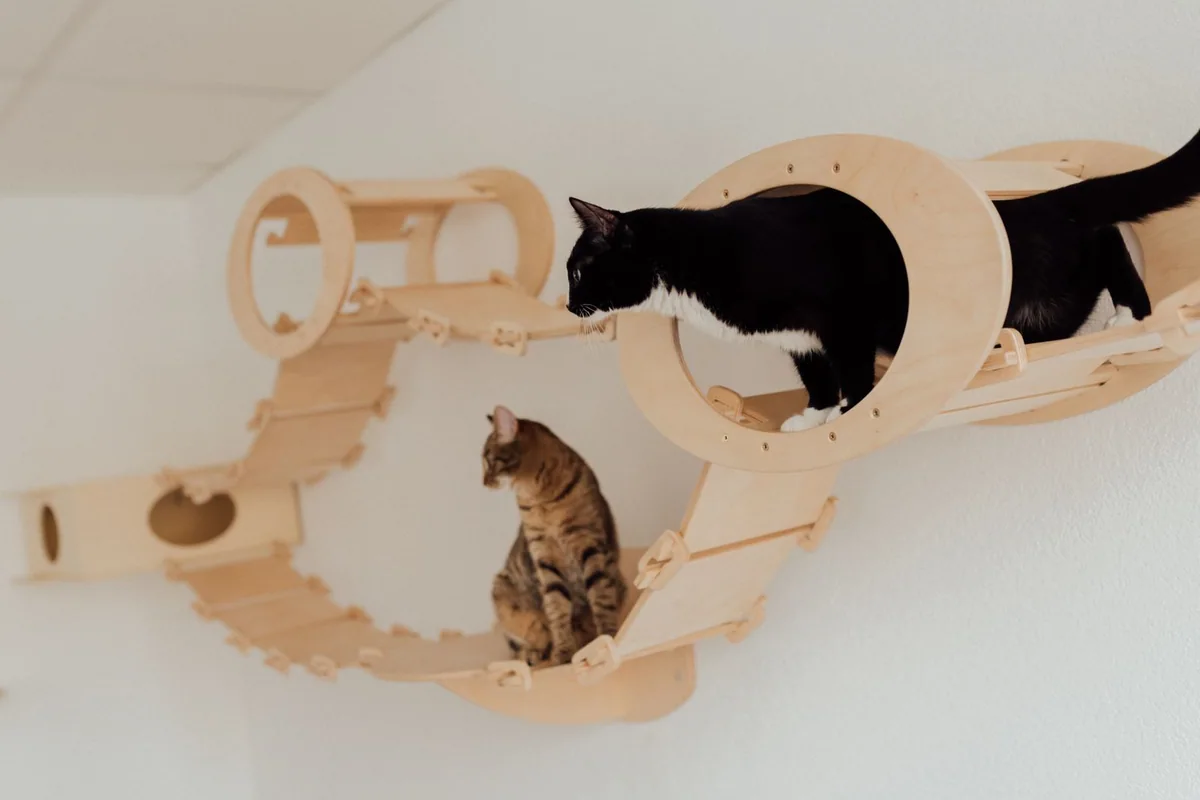
A cat on top of a bookcase looks like they made one big decision. Watch the journey from the floor and you may find five smaller decisions. The sofa was firm enough to push off from. The cabinet door was closed. A pile of books left one corner clear for landing. The cat reached the top, looked into the room, and then came down the way they had arrived. Remove the cabinet and the same bookcase can go from a favorite destination to somewhere the cat hasn't visited in weeks.
Start by plotting the routes the cat has already invented. The idea is to make their useful connections safer and more reliable. Put extra effort into the descent, since a cat that can get to a high surface may struggle to turn or return when something occupies the intermediate step. Keep the route simple enough that people can use the room normally. That can be as modest as two low platforms on the way to a broad shelf or as extensive as a circuit around a room with more than one route to the floor.
Mark actual takeoffs and landings
Sketch the room and write down where the front feet land on each surface. A broad cabinet can be a small landing if one end is crowded with lamps and the other end is too close to the wall to turn. Observe which edge the cat uses. Measure the gap in that direction and compare it with a few ordinary jumps the cat makes elsewhere. Distances that look similar on a diagram can feel very different when the cat has to turn in the air or find a patch of rug on the way down.
Mark the places the cat looks before committing. If they glance downward and retreat from a particular edge, the route may need another step or more space at the landing. Notice whether they can stop partway through and look around. When all the intermediate surfaces are too small for a pause, the route only works as a sequence of leaps. A generous platform after a bend can make it possible to wait while someone walks through the room, then continue without starting over.
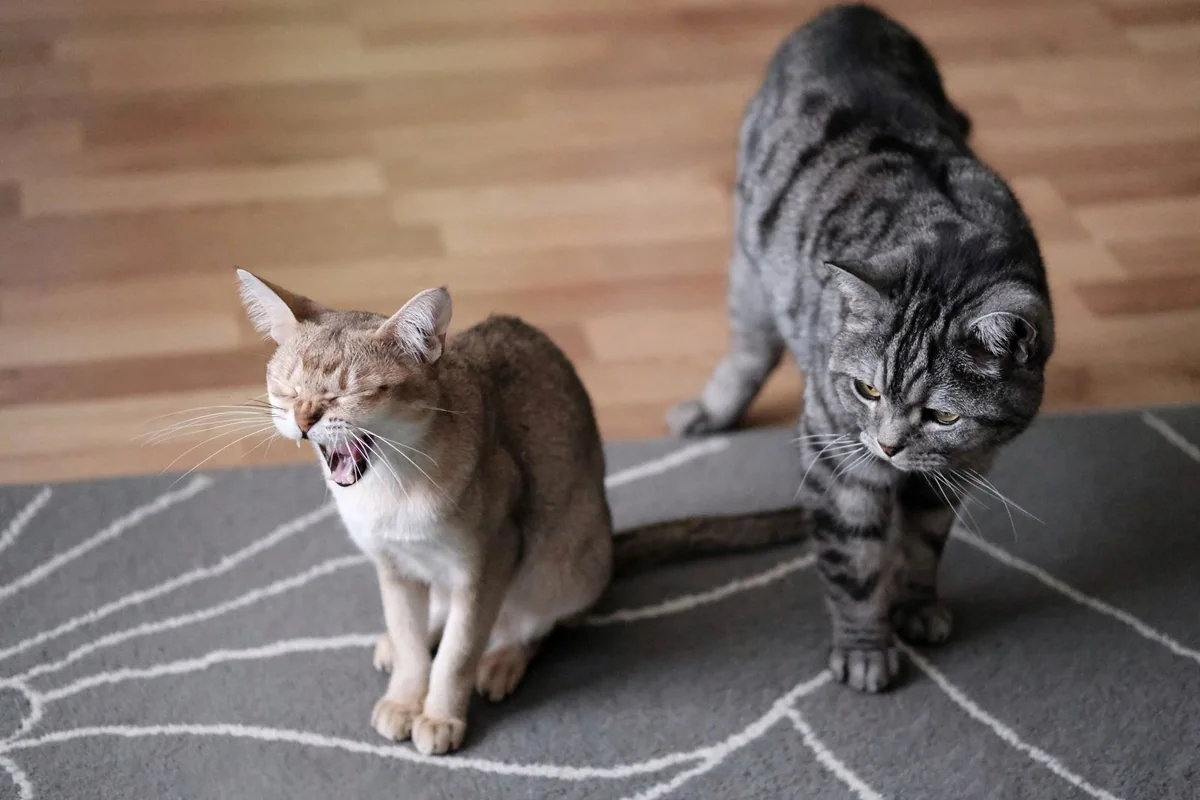
If there are two cats, map each one independently. A bold young cat might cross directly from a chair to the top of a cabinet. A quieter cat may use three lower surfaces, if the first cat is elsewhere. Give both a way to get back to the floor. A shared destination with one way in can become hard to use whenever someone is already there, even if the two animals sometimes share a sofa without any difficulty.
Look for a section where you can pick up toys or reach a switch without standing beneath the usual landing. A route across the center of household activity will need more attention than one along a quiet wall.
Decide what the route is for
A lookout over the living room needs a stable surface wide enough to turn and lie down. A route over a low traffic area may be useful simply because it offers a way to walk away from an energetic dog. A quiet resting shelf in a bedroom has a different job. It needs an approach that works when the light is low and a location well away from a door that opens across the lower landing.
Put the destination where the cat wants to spend time. A tall shelf might let them see through the doorway into the kitchen, while a shorter one behind a cabinet shows them the wall. Follow the direction of their head while they rest on existing furniture. It may be the view of the family they like, or the ability to put their back against something while keeping an eye on the room. Plan for the actual attraction rather than choosing the longest blank wall and trying to make it interesting afterward.
A route does not need to span the room. If the only valuable movement is from the floor to a nearby broad cabinet, you might add a single low step and clear the cabinet top. If the room has a deep alcove and traffic tends to pass close to it, a connecting shelf at the end could lead to a better descent. Two well positioned platforms often get more use than a wall full of small stepping stones.
Test low and make the permanent structure sturdy
Try the sequence at a modest height with stable furniture before drilling. Ensure each piece is assembled and secured as intended, and move anything breakable away from the possible landing area. Let the cat investigate while the room is quiet. If they skip a trial platform, look at whether they could see its surface clearly from the last one. A well lit route with good grip may invite movement while a dark surface against a dark wall seems to disappear.
For anything fixed to the wall, check the instructions and the actual wall construction before choosing hardware. Use the supports and fasteners rated for the installation, including moving loads, and consult a competent installer if you are unsure what is behind the wall. Position platforms away from door swings and openings that could put the cat in reach of an unsecured window. Leave space around fixtures that generate heat and keep the route away from cords and hanging loops.
Run a hand over edges and corners once the work is done. Feel for a protruding fastener, a lip that catches a pad, or a gap large enough to trap a paw. Check that the shelf is steady under sideways pressure as well as downward pressure. While the cat is elsewhere, try moving a pad with a brisk push. If it travels several inches, it may slide when an animal lands. Choose a suitable fixed cover or a surface that provides traction without a pad. Recheck parts regularly and after any sign of movement.
Design the way down before adding height
A descent that looks clear on installation day might vanish as soon as someone parks a bicycle or puts a pile of parcels in the hallway. Decide which floor area has to stay open. Make it easy to keep clear by putting a basket or a hook where people normally drop their things. If the landing lies right next to a dining chair people pull back after every meal, a second descent elsewhere will be useful.
Give the cat a chance to turn before committing to a drop. A landing as wide as their outstretched body may be useful at a sharp change in direction, depending on the animal and the room. Check the size in a simple way. Watch the cat turn on a sturdy low surface and note where their feet go. Keep the higher version generous enough to accommodate the movement without making the cat fold around a post or hug the wall.
Set up more than one descent when the room allows it. A cat who reaches a lookout and finds the usual lower platform occupied by another pet should have an alternative. Sometimes the solution is two routes at different ends of a broad surface. Sometimes it is moving the entire route farther from the dog's favorite sleeping place. Follow the household's regular traffic before deciding which fix will be dependable.
Imagine a bookcase beside a low cabinet and a sofa under the next wall. The cabinet gives the cat a comfortable first step, and the bookcase itself has enough room to turn. From the top, the cat usually looks toward the sofa before coming down. Rather than adding the next shelf directly above the cabinet, put it where it can connect the bookcase to a stable lower platform beside the sofa. Check that this new approach still works when someone sits down and when the sofa is moved to clean behind it. That comparison may suggest a route along the other side of the bookcase, where the lower steps can stay independent of the seating.
Keep the route in service
Once it is built, watch the room through an ordinary weekend. Did a guest hit their shoulder on a low platform? Did someone close the study door and cut off the route to a second step? Was the cat able to make the descent when a person was seated underneath? Real use exposes design issues that a cat testing it in an empty room may never encounter.
Keep a plain maintenance rhythm. When you clean the surface, check that the fixtures are still tight and the covers remain secure. Replace damaged pads and move furniture back where it belongs if it is part of the route. If you change the room around, treat the takeoff and landing points as part of the plan. A table only has to move a foot to make a familiar leap end in a narrow gap.
As a cat's preferred movements change, revisit the route. You might add a lower step or offer a resting place at the level they already choose. Sudden reluctance to move in a familiar way is worth discussing with a veterinarian. The route is an opportunity for the cat to get somewhere useful, and it succeeds through everyday use. A low connection that stays open and has a soft, broad landing may end up doing the best work in the room.