Help a Cat Get Comfortable with Paw Handling
Begin with a touch your cat already accepts and practice shorter, easier movements toward voluntary paw handling.
7 min read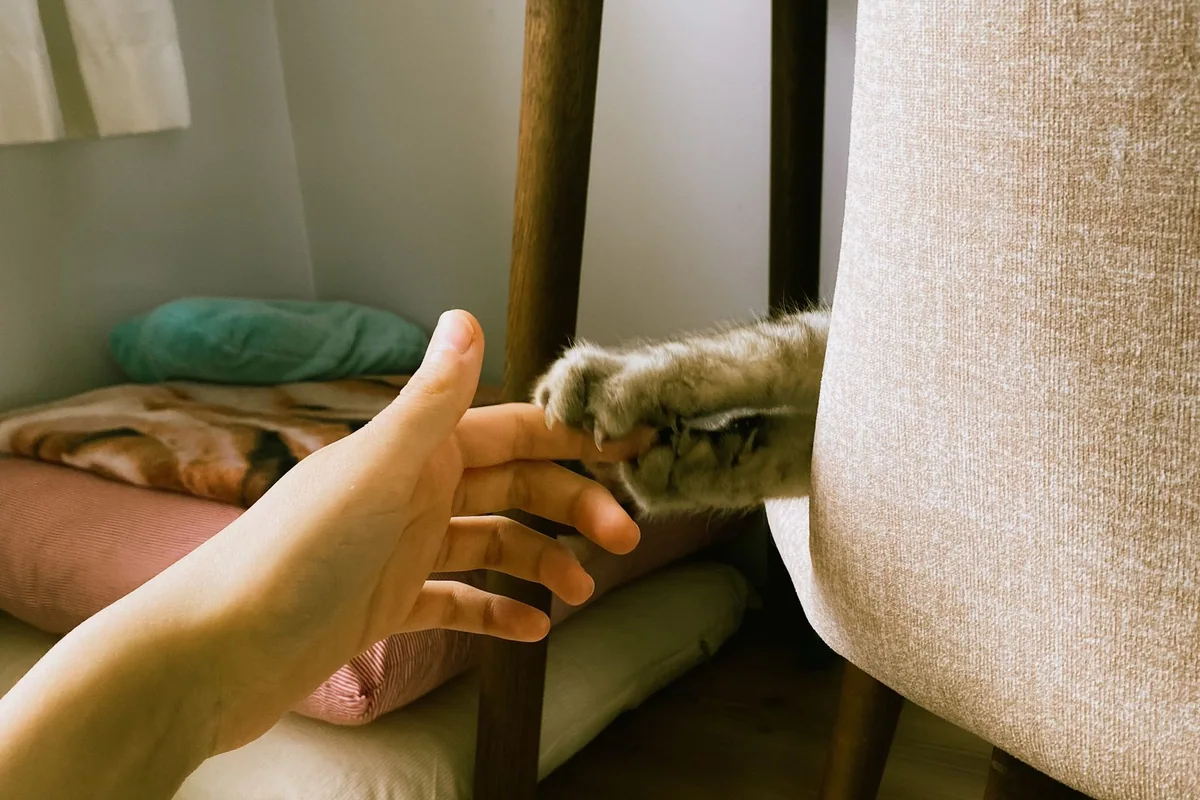
A cat may sleep beside your hand and pull back the instant your fingers brush a front paw. The two experiences are quite different. One allows the animal to choose the pressure and position. The other arrives near a part of the body they use for walking, gripping, and moving away. Practice works best when the cat has that freedom throughout the session. A successful start may be one short touch above the paw while the cat continues sitting in the place they chose.
This exercise is for ordinary, gradual practice. If you suspect pain, injury, or a new problem with a paw, arrange veterinary advice rather than trying to teach the cat to tolerate your examination. Likewise, a needed nail trim or other procedure may be best handled with help from a veterinarian or qualified groomer. Separate the urgent job from the long-term skill. Each practice session can end after a small movement that feels easy to both of you.
Find a comfortable position and a clear exit
Work where the cat can walk away. A broad low mat, a favorite seat, or a stable padded bench may suit different animals. Sit beside the cat or slightly off to the side, instead of looming overhead. Keep the cat's way down clear. An animal sitting on your lap may accept contact at first and realize later that your arm is across the only way off. Give them a chance to stand without having to push past you.
Notice how the cat normally asks to continue when they enjoy contact. They may come closer, lean into a touch, or place themselves in reach again after a pause. Put a hand near the shoulder and wait briefly. If the cat approaches or stays loose, a short familiar touch may be a comfortable beginning. If they turn the head sharply, flatten against the surface, or lift a paw away, move back and pause. Read the whole animal and the sequence rather than relying on one signal alone.
Choose a reward your cat can have and actually wants in that moment. A tiny piece of suitable food can make timing clear. A cat may also prefer a break or a little space between attempts. Keep rewards ready in a closed container or out of the cat's reach, then use one hand for contact and the other to deliver the reward afterward. A person searching for food with their touching hand will have difficulty showing when the exercise is finished.
Work down the leg at the cat's pace
Start with a short stroke where the cat already welcomes it. Stop, mark the moment with a quiet word if useful, and give the reward. At the next session, see whether you can end the stroke slightly closer to the upper leg. Move a small distance each time. If the cat shifts their weight away, next time keep the contact higher or shorter. Repetition at the easy position is worthwhile even if you had hoped to reach the paw that day.
Give each attempt a clear beginning and end. A hand that stays over the cat after touching can feel as though another movement is coming. Move it away at the end so the animal can decide whether to stay or leave. A pause also lets you see the cat's baseline position again. If they continue to watch the hand closely after it withdraws, give the session a break rather than adding a harder touch.
Do not assume the same amount of practice will work for every leg. A cat might offer the paw nearest you and move away when you reach across their chest for the other one. Change sides yourself instead of crossing over. Give the second side easier attempts, using a position that leaves enough room to back out. The hind legs may need another arrangement entirely. Start near an accepted contact point and preserve the normal path away.
Add contact around the paw before any lifting
When the cat is willing to accept a touch closer to the foot, briefly touch the top or side of the paw while it stays on the surface. Avoid closing your fingers around it. Stop as soon as the touch is complete and reward. The difference between a finger arriving and a hand holding is a big step, even when both happen in the same spot. A cat can become comfortable with the first part over several short sessions before you consider the next one.
Try offering a hand palm up near a paw if the cat is already comfortable with your fingers there. Some cats choose to investigate or shift a foot in the direction of the hand. Mark and reward any gentle movement you intend to keep. Be prepared for the cat to put their paw back on the floor right away. Support what they offer and release it quickly. Avoid lifting by a toe or holding the limb in a position the cat did not choose.
Change either the location of the touch or its length at first. One second on the top of the paw is a different attempt from a quick contact near a toe. If the cat pulls away, let go and end the repetition. A hand that closes as the animal tries to leave makes the withdrawal more difficult and can undo the useful experience of earlier practice. There is no need to keep going until the cat is willing to tolerate pressure or a longer hold.
If the cat happily offers a front paw at the start and moves away as soon as you shift your seat, finish the easy version there. Rehearse the new position separately on another day.
Introduce equipment on its own
For an eventual grooming task, let the relevant item sit safely in the room while you do something familiar. Keep sharp tools closed and out of reach. A cat who is comfortable touching paws may still be startled by a metallic click or the sight of a hand taking a tool from behind their back. Handle the empty movement separately. You can pick the tool up and put it down while the cat is relaxed at a comfortable distance.
If it makes a sound, let the cat hear a quiet example far away during a session that does not include paw contact. Make the next attempt easier if they leave. A good practice sequence might cover a hand approaching the paw on one day and a tool moving across the table on another. When both are unremarkable on their own, you can see whether their combination is also acceptable. Have the professional who showed you the grooming procedure confirm any tool technique you will use.
Maintain a way for the cat to decline the task. Some people use a particular mat as a station and pause when the cat steps off it. The station can be introduced well before the paw work, so the cat already knows it is a comfortable place. Returning to the mat later is a new opportunity. If they take the reward and leave, give them the break rather than carrying them back for one more attempt.
It can help to run through a session with your hands empty while the cat is elsewhere. Sit where you intend to practice and see whether you can withdraw your touching hand without leaning toward the place the cat would step. Put the reward where your other hand can reach it quickly. Ask a second person to describe what they see when your touching hand is in its resting position. They may notice your wrist is still hovering just above the surface. A clearer end position is useful when you later need to add a second person or a tool. Both hands can become still, away from the cat, before you invite another repetition. Keep the same quiet layout from one attempt to the next.
Know when a practice session has done enough
A couple of easy touches may be a complete session. When a cat is tired, busy looking outside, or occupied with another animal, the conditions might be poor even though the previous practice went well. Use the next quiet opportunity rather than measuring progress by the calendar. Make a note of the highest easy point and which side you used. Specific notes matter if several people are trying to help or if there has been a long gap.
Check whether the cat still accepts the familiar touch on the next occasion. That is often more informative than reaching a lower point once. If they become more cautious as soon as the mat appears, the practice may have progressed too fast or become too predictable in a way the cat dislikes. Spend some time offering the mat for ordinary resting, without touching a paw. Return to a comfortable step later and stop after one repetition.
The practical benefit may be that the cat stays relaxed while you look near a foot, or that a groomer can ask them to stand briefly without a struggle. Respect the stage they can offer. A short, voluntary movement repeated calmly is useful on its own, and it provides a starting point for the person who needs to handle the next part.