Sharing a Backyard With a Dog
Give a shared garden room for movement, quiet rest, and everyday maintenance without asking the dog to navigate everything at once.
8 min read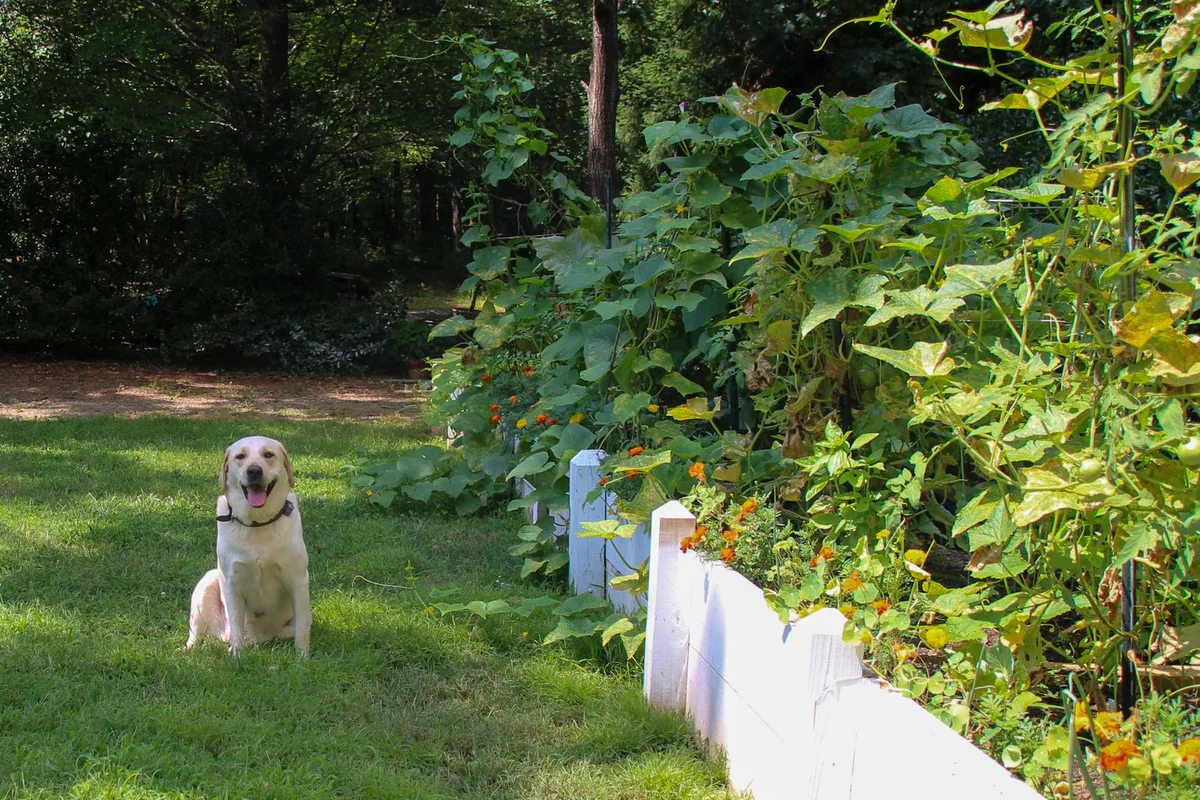
A backyard can ask a dog to do a surprising amount of detective work. The only open space may be a rectangle between a washing line and a vegetable bed. The shady corner might belong to the hose, and the favorite place to watch the world could be the spot where the lawn mower comes through every week. Over time you may find that the dog has already drawn a map of the yard by wearing a path along the edge of the grass and sleeping in one particular sliver of shade.
Use that map as a starting point. You can make useful changes in a small yard without converting it into a separate play area or buying anything large. A better route to the gate, a less exposed spot for water, and an agreement about where tools go can make more difference than another piece of equipment.
See what the dog does when you are nearby
Take a chair outside and look at how the dog uses the space on an ordinary day. Pay attention to where the dog comes out, which direction they travel first, and where they pause. Watch at a different time the next day. On a warm afternoon, the preferred route might be almost entirely different because the shaded part of the yard has moved. A dog who lies on the porch when you are outside may choose a different place when the family is having a noisy meal around the table.
Look at the surfaces in the spots the dog chooses. A single narrow strip of soil along a fence may be popular for a reason. It may have shade, a wider view of the neighboring garden, or the only route around the backs of chairs. If the dog keeps stepping through a planter, it may be possible to move the planter a short distance to create an easier route. Give such a change a few days before committing to permanent edging.
Notice how the dog gets from one part to another. A tucked away bed is less useful if the route to it passes through a tight space where somebody is hanging laundry. Think of a floor plan inside a house. You would leave room to get past a chair while somebody is sitting in it. Apply the same thinking to the positions of a bench, a planting tub, and an open shed door.
Separate active paths from quiet space
A path for movement can be a length of level ground beside a boundary, a loop around a central patch, or a clear line from the door to the back of the garden. Walk it yourself with the dog when the yard is in normal use. A route that feels wide enough early in the morning may disappear when bikes are against the fence or someone opens an outdoor chair. Move frequently used objects out of the path first. This is less work than trying to relocate the path around every temporary obstruction.
A resting area can be compact as long as the dog can enter it, turn, and move out easily. Try setting a washable bed or mat on a dry surface away from the busiest route. In warm weather, make sure the dog can get to a cooler area and come inside when needed. Trace the shade at the actual hours you use the yard. A cloth cover or a parasol can shade a spot briefly, but anything that can shift in a gust needs appropriate support and placement.
For some yards, the most interesting vantage point is also the loudest. If the dog spends the afternoon scanning a path beyond the fence, see whether there is a comfortable resting spot with a more limited view. A planter in front of a busy sight line may make one corner easier to use, if the planter is safe and cannot tip or create an access problem. The dog should still have enough space to move freely around it. Keep the option to rest inside, particularly if neighboring activity changes from day to day.
Treat gates as part of the household routine
Test the latch from the direction in which people actually use it. A stiff gate that closes when you pull it by hand might swing back open if a child walks through with a bag. Look for wear, gaps at the ground, and points where the dog can reach through. Inspect the rest of the fence as well. The places behind a shed and underneath a hedge are easy to overlook. Repairs may be needed before a yard is suitable for loose use, and the dog should remain supervised whenever the boundary is uncertain.
Make a clear spot just inside the gate where a person can stand while someone else enters. Before a visitor arrives, bring the dog indoors or hold the leash if the gate has to stay open. Do the same when gardeners, deliveries, or household members need to go back and forth. A sign can remind people to close the gate. A household plan is what determines who has the dog while the gate is open.
An area used to set down shopping, sports equipment, or bins can drift toward the entrance over time. Give those items a separate home so that the latch and the floor around it stay visible. Check the layout again after storms and seasonal yard work. A loose panel behind new growth can be hard to spot from the house. Walk the edge of the fence after you move a large object rather than assuming the barrier beneath it still looks the same.
Give garden work a time and place
Store products and equipment where the dog cannot reach them. Keep the dog elsewhere during tasks that involve power tools, exposed debris, or a gate left open. Read the labels before applying any garden treatment and follow directions about pet access. If you need advice about a plant or a garden product, identify it before consulting your veterinarian or a qualified garden professional. Common names can describe different plants. A quick guess based on a picture on a bag is a poor basis for deciding whether a space is safe to share.
Think about small materials that travel. A line of twine can work loose and move across a lawn. A bag can blow out of a bin. A short piece of irrigation line can end up where a dog habitually lies down. Put clippings, broken pots, and packaging away when you finish working rather than collecting them at the end of the week. Make a short visual check part of taking the dog out after a yard project.
Choose a water location that will stay clear while the garden is in use. A bowl under a work surface can collect material dropped from above. One placed along the usual path may be kicked or tipped repeatedly. Pick a stable spot with shade and clean the bowl as needed. You should be able to reach it without walking through the dog's rest area or opening the gate.
Plan for things to be damp and dirty
Use a hook near the door for a towel, and put a mat where the dog can walk over it without a sharp turn. Give wet items room to dry and keep a clean towel available for the next trip. These small arrangements make a yard easier to use in poor weather. A dog is more likely to go out willingly when the return route remains simple and nobody has to catch a swinging door while clearing a pile of shoes.
In rainy periods, watch which areas become slippery or hold standing water. Move the resting spot away from the wet section or keep the dog out of that part until it is suitable again. Where a preferred route turns into mud, try opening a nearby line on more stable ground. Take note of where water runs before filling a dip or adding a barrier. A feature that helps with one puddle may simply send water to the door or the neighbor's yard.
Clean up regularly even if the garden is private. Choose a routine you can do in daylight, and keep bags somewhere reachable. If several people use the garden, a quick sweep before meals or play helps keep the whole space available. If you collect waste every time you mow, you may miss the periods when the grass does not need cutting but the garden is still busy.
Make one change and watch it earn its place
Choose the inconvenience you notice most often. If the dog's path crosses the space between the patio and the shed, move a chair and see if a second route appears. If the favorite spot is always in direct sun by midday, see whether the dog uses a cooler resting spot you have made available. If the gate remains difficult to operate, deal with that before changing the plants. There is no need to make all the decisions while looking at an empty yard.
A small garden may have one area that changes roles during the day. It can be a good place for the dog to explore in the morning and a useful spot for a meal in the evening. Keep the handoffs simple. A movable chair and a washable mat may serve both purposes with less effort than a permanent division. The result should be a garden that the people and the dog can use on a busy weekday, when nobody has time to carry out a complicated plan.