Teaching a Dog to Turn With You on a Walk
Teach an easy walking U turn by choosing room for a curved path, rewarding the first steps in the new direction, and rehearsing well before you need it.
8 min read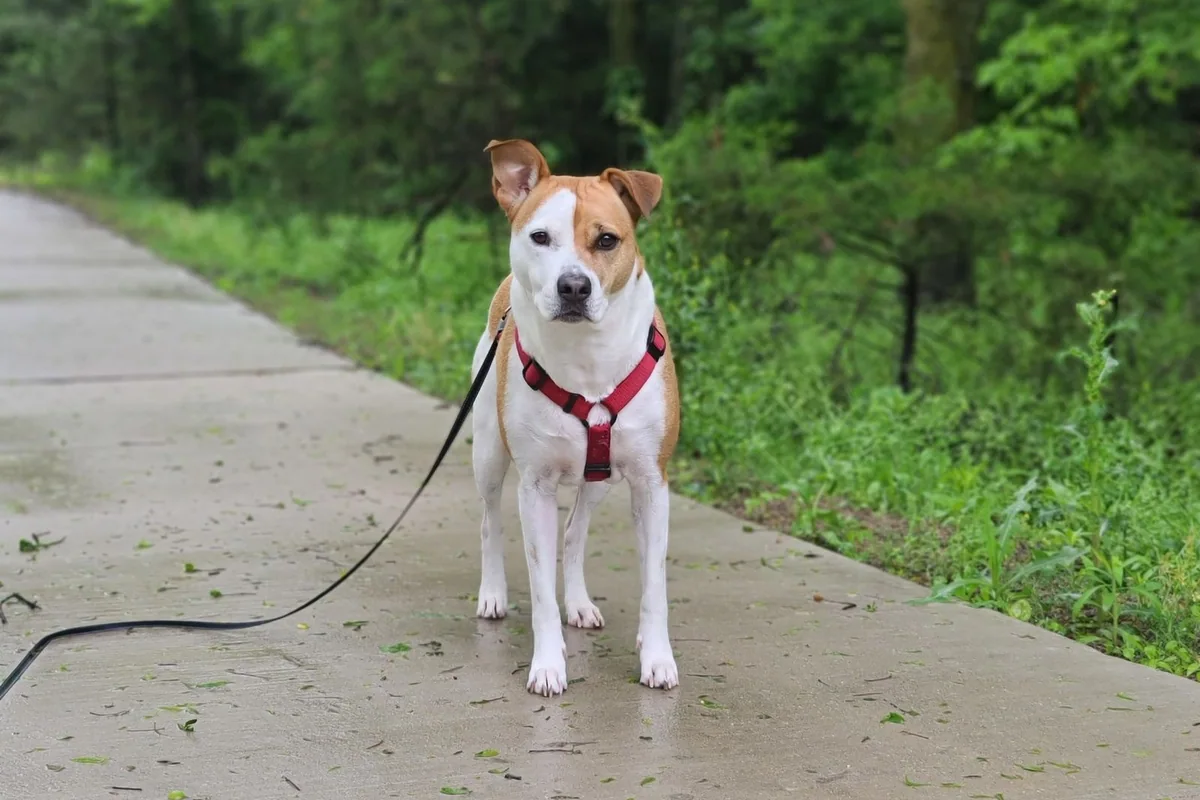
A walk has plenty of good reasons to change direction. A person has dropped a bag across the pavement. The crossing you meant to use is closed. The path ahead is too narrow for two groups to meet. A dog that recognizes a familiar invitation to turn can come along without needing to know which thing you are avoiding. It helps if the invitation has already been used on days when there was nothing important happening at all.
The movement is simple. You and the dog walk along together, you give a cue, and both of you follow an easy curve toward the opposite direction. The leash stays loose enough for the dog to take their own steps. Start somewhere with more space than you will usually have outdoors. Once the dog knows the motion, you can look for places to use it on a normal walk.
Make the first turn without a reason to hurry
Use a quiet room, a safe enclosed yard, or an empty broad area where the dog can comfortably walk with the usual equipment. Choose a surface that gives both of you stable footing. In a public setting, use a properly fitted harness or other appropriate walking equipment and a leash that you can manage. Leave room around you so the dog can trace the curve without meeting a wall or passing between your feet.
Begin by walking a few steps in a straight line. Pick the direction in which you will turn and look at the ground ahead. Move through a wide arc at an ordinary pace. If the dog moves with you, mark the first obvious steps in the new direction and offer a reward where the dog can easily take it beside you. Walk a few more steps before stopping. The reward should fit the movement you are teaching. If you stop before delivering it, the dog may learn to turn and stand still.
Start with a partial change in direction if the dog does not follow a full turn comfortably. A shallow bend gives you an opportunity to reward the dog for noticing the way you have moved. Enlarge the curve later. You can practice a clean change of direction without needing to cover much distance. Leave enough space at the end of the arc for the dog to continue at the same pace.
Work out who walks on the inside of the curve
A turn can place the dog nearer the center or farther out. When the dog is on the inside, shorten your own stride so that you do not step across their path. When they are on the outside, give them enough leash and time to cover the larger arc. Some teams find one version easier because of the way they usually walk. Practice the easy side first and see how the other side feels in a separate session.
Watch where you bring your reward hand. If it appears across your body, the dog may cut in front of your legs to reach it. A hand that arrives in the direction of travel on the dog's side makes a straight next step possible. Have the food accessible so you can keep the leash steady while delivering it. It is often simpler to mark the first turn, take a couple of steps, and hand over the reward on a clear piece of floor.
If the leash tightens, slow down and check what caused it. A wide arc in a cluttered area may bring the dog toward furniture while you pass through the available gap. You might also be stepping away faster than the dog can reorient. Reset on a straight line, choose a more open curve, and use a speed that leaves the dog a chance to move alongside you. Pulling through the turn changes the exercise from a shared direction change to a struggle over where to stand.
Give the turn a word before you begin it
When the dog readily follows your change of direction, choose a short phrase such as “this way.” Say it while walking, just before you begin the familiar arc. Mark and reward when the dog follows. A word said after your shoulders and feet have already turned may simply accompany the action. Put the word slightly ahead of your movement so the dog can use it as advance information.
Try one repetition where you check behind you before saying the cue. That is the order you will often need on a walk. Make sure the dog has room to follow your movement and give the cue only when you know which way you can go. If the dog turns but you immediately have to step back because someone is passing, it is harder for them to predict what the next step should be.
Avoid practicing multiple reversals in rapid succession if the dog starts anticipating the curve as soon as you slow down. Walk straight for a little while between turns and let the ordinary walk continue. You can vary where the turn happens without changing the cue. A turn near a bench and a turn in the middle of a clear path should begin with the same recognizable invitation.
Take the movement to a quiet stretch of your usual walk
Try a turn outdoors where there is space on both sides and no immediate need to move away from anything. Pick a moment when the dog is already walking with you. Say the cue, walk through the curve, and reward in the new direction. Then follow through with a pleasant part of the walk. That may be a few steps to a familiar patch of grass or simply time to look around.
Practice with the other person who walks the dog, if applicable. They may hold the leash in a different hand or walk faster. Have them try the same turn at an easy pace where the dog can see the movement. Agree on the cue and how you will keep the leash from crossing your body. Household consistency can be as much about the shape of the movement as the words people say.
A street corner can look like a good practice spot because it offers a change of direction, but the curb may create too many competing movements. Start well away from traffic. Pay attention to bikes and people who may pass quietly from behind. A wide place with good visibility gives you time to look both ways before you move. Where space is limited, an ordinary turn onto a permitted side path can work better than a tight U turn on the pavement.
Know when to turn before the situation becomes crowded
A useful turn begins while there is still room for it. If you see a person and dog entering the far end of a narrow path, look for the open space behind you and use it early. You can wait in a wider place, take a different route, or let the other group pass. Starting while the dog can still hear and see you is more reliable than waiting until both groups are stopped face to face.
The cue is one tool for changing direction. If your dog is too distracted to respond, prioritize increasing space by whichever safe route is available. Keep control of the leash, move steadily, and avoid blocking other people. You can ask the other person to wait briefly if that gives you room to move. Treat a difficult situation as a reason to practice farther away next time. If a dog routinely struggles to move away from traffic, people, or other animals, a qualified reward based professional can help you make an appropriate plan.
Let the turn lead to something useful. Once you have moved away from the crowded part, allow the dog a chance to look around in the new space. If there is a quiet stretch ahead, use it. A direction change can become a predictable way for both of you to keep walking comfortably. There is little reason to walk straight back into the same narrow section unless the way has cleared.
Think about what a turn looks like from the end of the leash. The person may be trying to reverse course, but the first clue the dog gets could be that the hand has moved from one side of the body to the other. Try one repetition with a companion observing from the side. Ask whether the cue preceded the movement, whether the dog had enough space, and whether the first steps stayed clear of the person's feet. Pick one of those observations to work on at the next outing.
Rehearse the version you would want to use tomorrow
Pick one place on your usual route where an ordinary turn would be practical. Watch for a good moment, make sure the ground is clear behind you, and try the move once. If it goes smoothly, continue the walk without needing to repeat it. If it feels awkward, identify the specific cause. Your reward may have sent the dog across your feet, or the available curve may have been smaller than it looked.
Practice that part at home or on a quiet stretch later. For some people the useful change is a larger first step away from the curb. For others it is a better place to put their hand. The dog learns from the whole sequence. A brief cue, an open path, and time to follow it should feel much the same on a normal day as they do on the day a delivery cart takes up the whole pavement.