Teaching a Dog to Touch Your Hand
Build a voluntary nose touch with a still palm, clear reward timing, and enough space for the dog to choose each approach.
8 min read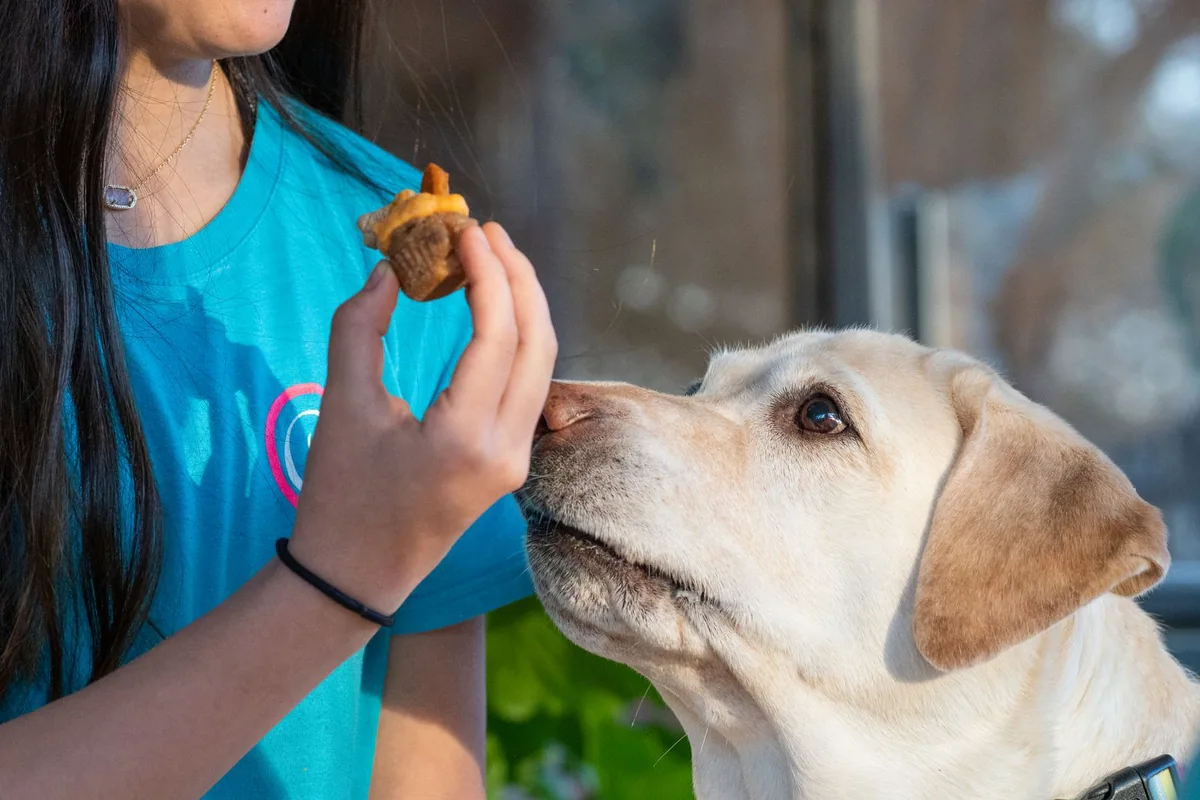
An open hand can give a dog a precise place to go. That is useful when you want to bring their attention back from the other end of a rug or guide a turn without physically moving them. A nose touch is small enough to teach during an ordinary afternoon at home. It also reveals something about the way a dog learns. If the hand appears at a comfortable height and stays still, many dogs will have a look at it. That tiny investigation gives you a place to begin.
Choose what you want before you practice. A touch might mean the nose comes into brief contact with the palm, followed by an immediate reward. You do not need a strong push or a long hold. You need a movement the dog can offer freely and that you can recognize in the moment.
Set out a palm that does not follow the dog
Pick a familiar room with enough floor space for the dog to stand, turn, and leave. Put a few small rewards the dog already eats safely where you can reach them with the hand that will stay out of sight. Avoid practicing in front of another dog that is waiting for the same food. Work at the level of your dog's nose, off to one side rather than directly in front of their face. With a small dog, you may find it easier to sit in a chair or on a suitable low seat.
Open the empty hand and hold it still. A sideways palm with relaxed fingers can be easier to approach than a hand coming down from above. Leave a comfortable gap between the dog's nose and the hand. The correct starting gap is one in which the dog can look at the hand without feeling crowded. It may be a few inches for a dog that happily investigates a person's hand and a larger distance for another dog.
Give the dog time to decide whether to move toward it. If you move your hand forward while the dog is moving forward, you take away the dog's opportunity to decide whether to close the distance. Notice the difference between a dog who leans in and a dog who moves their head aside as the hand approaches. If the head moves away, lower your hand and make the next offer from farther back.
Mark the small motion you can see
If the nose meets your palm, give a brief, familiar marker such as “yes,” and then give a reward from the other hand. Say the marker at the touch and reach for the reward after it. That order makes the information clear. If you begin taking food out at the same time as you present the palm, the dog may watch the moving hand and miss the target.
If the dog only looks at the palm or leans slightly toward it, you can reward that smaller action for a few repetitions. Bring the hand back to your side and offer it again at the same comfortable distance. As the dog begins taking an obvious step toward it, wait briefly to see whether the nose makes contact. Build on changes you can clearly see rather than deciding in advance how many attempts it should take to earn a touch.
Sometimes the dog licks the palm, offers a paw, or sits. Each tells you something about what the hand resembles to that dog. A palm held upright in front of the shoulder may look like a known signal for a paw. A low palm with fingers curled around food may invite licking. Try an empty palm off to the side, at the height the dog already holds their head. Keep the first repetitions short enough that the dog has a natural chance to reset.
Make the gap repeatable
After a few easy touches, remove the hand and wait until you and the dog are in roughly the same positions before presenting it again. A repeated gesture with a clear beginning is easier to read than a hand that stays open during the whole practice. If the reward sends the dog across the room, shorten its delivery so the next repetition can begin in a similar spot. You are trying to understand whether the dog saw the palm and chose to go to it.
Watch for your own unintended signals. You may turn your shoulders, lean forward, or call the dog's name before opening the hand. If the dog touches only when you bend toward them, the bend may be part of the signal they learned. Practice offering the hand while sitting still and give the dog enough time to find the change. A household member can watch one or two repetitions and tell you whether the hand is actually the first thing that moves.
When the dog readily touches the palm at the original distance, shift it by a small amount. Offer it a little farther left or right, then return to the original position. Do not change height, distance, and room in one step. A target just out of reach may require a single step rather than a lean. That is enough of a change for one repetition. Over time, a dog who understands the target can walk toward it instead of waiting for the hand to arrive.
Add a spoken cue when the action is familiar
An empty palm can work as the whole signal if that is convenient. If you want a spoken cue, choose a short word the household can use consistently. Say it once and then show the palm in the familiar position. Give the dog the same opportunity to touch and reward the contact. The spoken word should arrive before the hand, because the hand is the part the dog already recognizes.
With practice, leave a small pause between the word and the open palm. The dog may turn their head toward you on hearing the word. Still give them the target they have been learning to approach. In this exercise the word can announce that a palm is about to be available. It does not need to work from another room or without a target.
If someone else practices, have them begin at the easy version of the task. A new person may stand at a different angle, have a larger palm, or deliver the reward at another point. Let the dog investigate those differences with time and room. They may be happy to touch one person's hand and choose to keep their distance from another. Avoid asking unfamiliar people to offer their hands when the dog is moving away or has nowhere comfortable to stand.
Use the target for one practical movement
Try a touch at the edge of a familiar rug. If the dog is standing near it, open your palm at nose height a small step onto the rug. A reward after contact gives you an opportunity to see whether the dog found the new position manageable. If the rug slides or folds when stepped on, fix the surface before practicing again. A hand target can indicate a direction, while the route itself still needs to be suitable.
You can also use the hand to invite a small turn. Stand where the dog can see the palm without twisting abruptly and reward after they turn and reach it. Step around in a shallow curve if the space allows. The same exercise can help you and the dog change your orientation before someone passes in a quiet room. If a situation is too crowded or noisy for the dog to notice the palm, move to a more usable place before trying it.
Give any outdoor practice its own quiet start. Use safe equipment and keep the dog at a suitable distance from traffic, animals, and strangers. Present the palm once near a familiar doorway or a quiet stretch of path. A single easy response in the new setting is enough to begin. If the dog looks around instead of turning toward you, allow them to take in the environment and try the activity another time.
Keep the touch optional and easy to finish
A dog who turns away, keeps their head back, or leaves the practice area has given you useful information. Put your hand down. See whether the practice was too long, whether your position crowded the dog, or whether the floor made it hard for them to move. In a later session, use an easier setup and start with a position the dog has willingly approached before. If the dog appears uncomfortable with movement or touch more generally, discuss your observations with a veterinarian or qualified behavior professional.
Use the target for movements the dog can do safely. Avoid using it to draw a reluctant dog up to something that worries them or through a crowded gap. The dog learns what tends to happen after approaching your palm. If the next event is consistently uncomfortable, the response may become harder even in places where it used to be easy. Choose an available route and use the target only where a touch makes the next movement simpler.
End when you have had a few clear repetitions. You can close your hand, put away the rewards, and return to whatever the dog was doing before. On another day, you might practice only one or two placements with your back straight or your feet in a different position. A brief nose touch remains useful because it asks for a small, legible decision. Your best contribution is a palm the dog can see, a path the dog can choose, and a reward that arrives at the right moment.