Share a Home Office with a Cat
Give a cat a place near your desk and make calls, cables, and closed doors easier to manage during the working day.
7 min read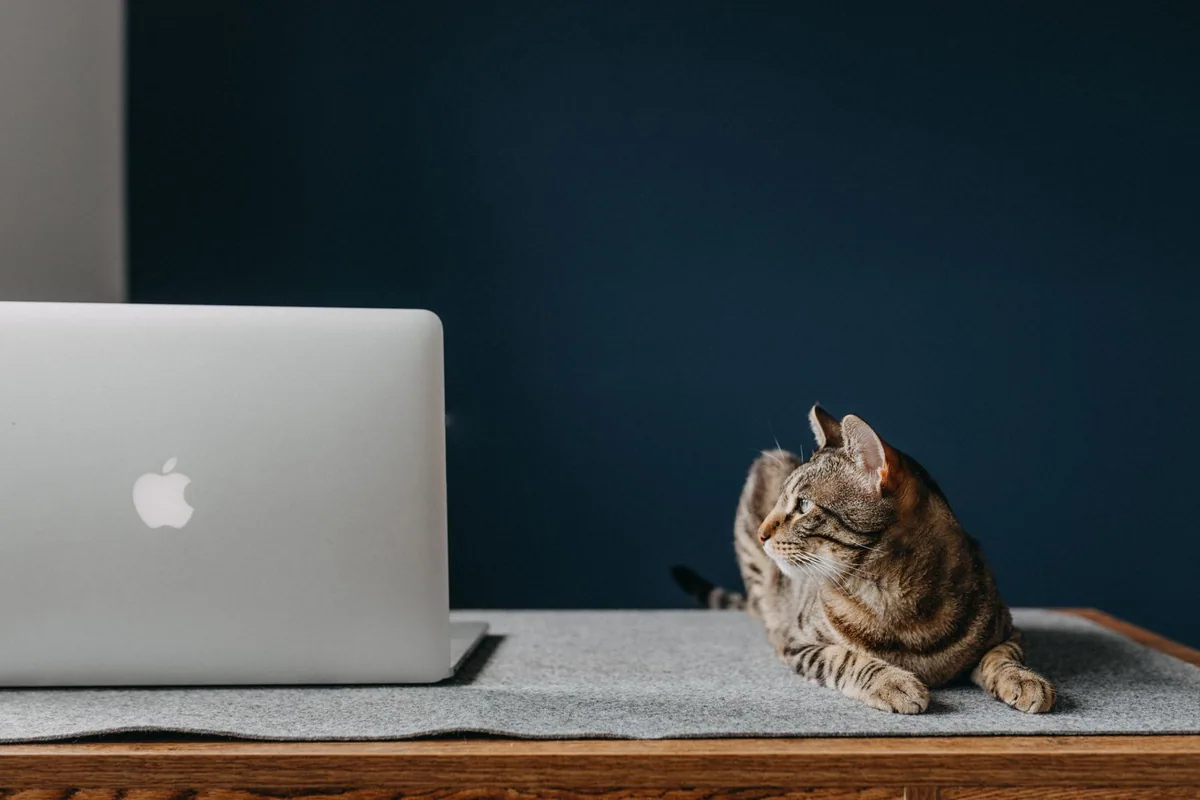
The first warning that a cat has joined your meeting may be a tail across the camera. The second is the microphone picking up the sound of a paw pushing your water glass toward the edge. A home office gives a cat company, a warm spot, and something new to investigate each time you reach across the desk. The workspace belongs to the person who needs to finish an email, but its attractions are real to the animal. A few physical changes can make it possible to share the room without spending the day steering the cat back to the floor.
Start with a working day you can actually repeat. When are you in the room? Which objects are moved every hour? Is your desk behind a door, in the corner of a bedroom, or right by the route to the kitchen? The solutions for a quiet spare room may be useless for a narrow dining nook. Draw the desk and the space just beyond it if a quick sketch helps. Mark the chair's full range of motion, the spot where you normally leave a mug, and where the cat enters.
Find what the desk offers
Observe a few visits without reaching out immediately. Does the cat make straight for the laptop while it's warm or also try the same spot when the machine is closed and cold? Do they follow your hands or climb up to sit with their back against your chest? A cat that simply wants a view of you may accept a seat beside the desk. A cat drawn by the bright display and your moving cursor might need a longer break from the spectacle before settling elsewhere.
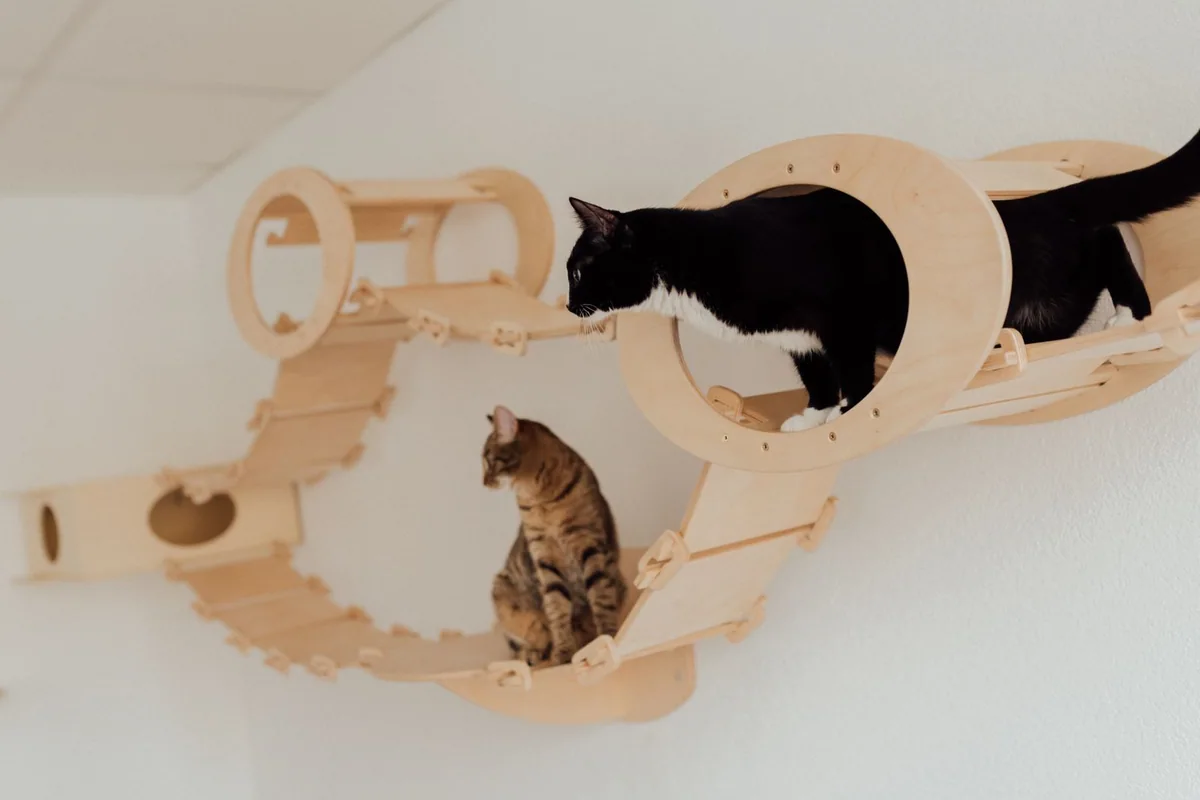
The path matters too. One cat jumps straight onto a table. Another gets there by stepping from the printer cabinet, circling the monitor, and crossing behind the screen. Mark out that route and decide which part could become a safe destination. A bench near the desk may intercept a route that begins on the floor. A box on top of an already sturdy cabinet may give the second cat a usable end point before they reach the monitor cables. Leave the return trip open so the cat can come and go without climbing over your knees.
There's an easy two-day test. Offer a familiar folded mat on a stable side table or chair within the cat's preferred distance of you. Keep it close enough that they can see your face without getting on the laptop. Use it during a quiet work block when you have time to notice the result. If the cat comes up, leave them free to settle or go. If they prefer a chair on the other side, move the mat there later and see whether they follow the surface or stay with their chosen location.
Make the desk less rewarding to explore
Keep objects that are likely to move or roll in a drawer or a closed container. Pens, clips, and hair ties can seem minor until a cat starts batting them under the monitor. Bring out what you need and put it back when finished. Use a lid for your drink and keep it away from equipment, even if the cat rarely knocks things down. A stable monitor stand is useful when the cat tends to walk behind the screen, provided it can't be pushed sideways or tipped from the back.
Route cables so they don't swing or form reachable loops when you adjust the chair or raise the desk. Hardware made for tidying cords can keep them together where the cat has no reason to put their face. Check where the cables go once they leave the desk. A neat bundle behind the monitor still leaves a loose section near the outlet if the extra length was never secured. If your cat damages a power cable, stop using it and replace it before turning the equipment on again.
Put scissors and hobby supplies away promptly, especially if the office doubles as a sewing or craft room. Close the lid on the rubbish if it contains the thread ends, tape, or packaging from your work. Keep office plants out of reach and check the identity of any plant you put in a shared area. An unidentified cutting makes a poor desktop decoration when a cat likes to sample fresh leaves. For a little greenery, keep it in a separate room unless you've confirmed it's suitable.
Think through the chair and door
A rolling chair makes a comfortable desk usable. It also makes the space under your feet unpredictable for a sleeping cat. Pick a place for the cat that lies well outside the chair's path, including the extra distance when you push back to stand. Give the floor a quick glance before rolling. If you have a sit-stand desk or powered chair, check under and around the moving parts before using them. Keep furniture away from hinges, openings, and spots where a cat could be pinned as the furniture changes position.
If the office door sometimes has to shut, get familiar with its rhythm before a meeting where you have to concentrate. The cat's usual water, resting spots, and litter should remain available on the side where you expect them to be. Try a short closed-door period on an ordinary afternoon, when there's time to stop and reassess if the cat seems unsettled. A single very long video call is a bad time to introduce a change that removes access to a favored room.
For a door that normally stays open, a reliable stopper can prevent it from slamming in a draft. Watch the doorway when you step into the hall, particularly if an exterior door lies directly beyond it. Some cats become especially attentive to little movements during the working day because each time a chair pushes back, someone might head toward the kitchen or open the porch. Let the cat clear the doorway before closing it and tell other household members which spaces are accessible.
Decide what happens during a call
Plan for the hour before the call rather than waiting for the cat to step onto the keyboard. A short play break before a meeting may help a cat who turns up around the same hour each day looking for activity. Put the toy away when you finish if it has a string or detachable piece. Let the cat choose what to do next. Place a familiar bed close enough for company if that has worked during ordinary desk time, or give them a quiet place outside the office if they are sensitive to voices coming through the speakers.
When the cat approaches mid-call, choose one response you can use calmly. If there is time, redirect them toward their nearby spot and resume work. If the cat is already settled on the desk, moving the keyboard to a safer position for the rest of the call may be easier than repeatedly lifting the animal. Avoid putting your hands around a startled cat to pull them away from the camera. Arrange the essentials and let the setup solve most of the problem before it starts.
Headphones can reduce sudden loud voices in the room, but they also make it easier to miss the cat walking behind your chair. Check the floor before moving even when you're looking at the screen. If you need to demonstrate an object, clear enough space on the desk ahead of time that the cat won't be next to a heavy sample, an open packet of small parts, or any hot drink.
Fit companionship into the workday
It can be easy to alternate between ignoring the cat for hours and reacting the instant they get on the keyboard. A more predictable pattern could be a morning play break, a quiet window near midday, and a minute to greet the cat before afternoon calls. Match the timing to the household. A shared desk in a family room may work best when one person knows who will handle doors and breaks during calls. Someone who works late may need to put the comfortable seat farther from the monitor so the cat can sleep while the room stays lit.
Consider giving the cat something to investigate away from the desk, especially during a quiet block when you can see how they use it. A sturdy cardboard box without loose tape or staples might hold their interest. A place to look outside may be popular at the hour the sun crosses the room. Rotating a couple of familiar objects is easier than putting a novel toy on the floor every morning and trying to decide which one kept them busy.
Look back at a working week. Note the part of the room where the cat spent the most time, the day that went especially smoothly, and any hazard you still had to handle by hand. If the cat chose the padded seat on three days but visited the keyboard every time the window was closed, you have a clue that tells you more than a running count of desk visits. The office should let you keep the chair, keyboard, and concentration you need while the cat can take part in the ordinary life of the room.